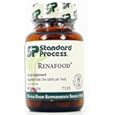
 One of the first things the vet gave me to give to Eric was Renafood, a supplement consisting of various detoxifiers, including beet juice. I’m skeptical that it actually does anything for two main reasons:
1. I feel doubtful about the efficacy of herbal detoxification in general, partly stemming from a skepticism about the quality control and potency of the herbs in any given supplement, and partly stemming from skepticism that herbal detoxification actually works in the way described. I mean, look: my cat’s kidneys are fucked. Thoroughly, utterly fucked. I’m not sure how or why minute amounts of carrot and beet might help him filter waste material more effectively, unless they’re somehow rebuilding his nephrons for him.
2. The logic of some of the claims presented in the Renafood information sheet. So, Renafood contains bovine kidney extract. That extract apparently holds “tissue cell determinants” that will instruct the kidneys to Shape Up, Son. I have no idea what a “tissue cell determinant” is, though I have a very vague memory of learning about cell fate determination—thanks, high school biology! But the information sheet doesn’t give any sort of helpful definition of what these tissue cell determinants do other than talking about something that sort of vaguely sounds like cell fate determination. Quoting from the information sheet:
The bovine kidney PMG extract found in Renafood contains cellular determinants that regulate cell activities. Genetic coding determines the proteins unique to cells in each tissue, gland and organ. Cellular proteins are the foundation of the cell’s nutrition. Similarly, bovine kidney contributes innumerable materials produced in the organ itself, such as acids, enzymes and hormone precursors—each captured and preserved to offer their innate benefits to the corresponding tissues in humans to promote optimal health.
Huh. That sure sounds like a fancy way of saying…nothing much. Prepare for a bulleted list!
- The first sentence makes an assertion that the cell determinants in Renafood regulate activities, and the next sentence is a more-or-less correct statement about cell fate determination, but doesn’t tell me how Renafood affects the genetic coding of cells.
- The sentence after that reads like a complete non-sequitur. Cellular proteins may or may not be the foundation of a cell’s nutrition (I don’t know enough about biochemistry to begin unraveling what this deceptively simple sentence means), but how does that relate to the thesis sentence or to the conclusion?
- Furthermore, what do they mean by “cellular proteins,” especially in this context?
- The first part of the last sentence is more-or-less true, because it’s essentially talking about the kidney extract providing proteins, fats and vitamins, but you can feed real food (like, oh, I don’t know, fresh kidney) and, if the Renafood claims are true, get the same effect.
- This information sheet from Standard Process explains what cell determinants do and how they relate to protomorphogens (which is apparently what constitutes the bovine kidney extract in Renafood), but it sounds even more gobbledegooky. The cell determinants in protomorphogens are apparently the mineral templates on which chromosomes are constructed. This is, near as I can determine (and I’ve confirmed this with biochemist friends just to make sure I didn’t miss something about cell biology) complete nonsense. Seriously.
- I’ve read the info sheet through three times, and I’m still not entirely sure how Renafood keeps cells healthy or helps regenerate cells, because I don’t see how the leap from digestive system to bloodstream to cell division is made—there’s a lot of talk about “affinity” and thermostability and how important cell determinant are, but very little actual science. The most credible-sounding scientific bits aren’t supported by any references, and most importantly, they’re not connected to how the supplement’s supposed to work. Speaking as a former technical writer, this is probably the shoddiest bit of technical writing I’ve ever seen.
- It doesn’t help that Royal Lee, the founder of Standard Process, has been prosecuted for criminal misbranding. The FDA has in the past characterized him as “probably the largest publisher of unreliable and false nutritional information in the world.” Given how lackadaisical the FDA has been and continues to be about food and drug regulation, these aren’t just fightin’ words, them’s strong fightin’ words.
- Taken as a whole, it sounds like Standard Prociess is claiming that eating Renafood will somehow stimulate kidney cells to work better through a mysterious process involving “cellular determinants.” If that’s not science-esque, I don’t know what is. (“Science-esque 2: This time, it’s not Science-esque 1!”)
In short: I’m not sure I buy into the idea that this does anything. I’m giving it to Eric right now because he loves it, and it doesn’t contain anything that seems overtly harmful. But my woo-woo meter is on alert, and if you want to save yourself $16, I’d argue that this supplement doesn’t do anything other than provide a nice source of vitamin A and a tasty snack.
Thanks for the sharing! Your post truly assisted me.
Comment to Renafood
I have been a practicing veterinarian since 1982, and I have used Standard Process supplements in animals (and my own family) for the past 20 years. I am now employed by Standard Process as a technical support veterinarian. I help veterinarians integrate nutrition into their clinical practices. I would like to respond to this post.
The author of the above post expresses skepticism on the value of using herbs, botanicals (plants) and glandular materials to support compromised organs (in this case, his/her cat’s kidneys). He/she lists multiple points of concern.
1. The author does questions the quality control of the ingredients in Renafood (or supplements in general). I would invite him to view a video of how supplements are made at Standard Process on our website (www.standardprocess.com). Standard Process Inc. produces all supplements under the same stringent regulations used in the manufacture of pharmaceuticals. We are inspected by the FDA, USDA and other regulatory organizations multiple times per year. Each supplement we produce is tested by our in-house laboratory up to six times before it is released to the public. Quality control is taken very seriously at Standard Process Inc.
2. You don’t believe that herbal detoxification is possible. I would be happy to provide you with references of how herbs and foods can affect detoxification mechanisms in the body. After 28 years of practice and years of clinical experience with these products, I can attest to their value. The FDA does not allow supplement companies to make any claims on their products in relation to specific diseases, so will not be doing so. The fact is that most chronic disease have been linked to nutritional deficiencies, so providing quality nutrition to compromised cells can improve their ability to function.
3. Cell determinants. As I mentioned, we are severely restricted by the FDA as to what we can say about our ingredients, so the information is vague and difficult to get a clear picture. For more information on how protomorphogens, cell determinants, or glandular tissues can be of therapeutic value, look at the more recent subject of Oral Tolerance Therapy. OTT is touted as a ‘new and promising’ therapy for a number of diseases, using cell extracts from various glands to treat specific glandular diseases. This can help explain how eating some kidney can help a compromised kidney. This is what the catalog is talking about when supplying cell determinants. Your not understanding what cell determinants are does not qualify you to say they do not exist or cannot be of clinical value. But I will agree that the writing could be more precise.
4. Dr. Royal Lee spent his life fighting the FDA, and yes, he was brought up before them several times. He was an outspoken critic of the adulteration of foods that came into common practice starting in the 1920’s (bleaching of flour, high-heat processing of foods, processing of foods to increase shelf life, the addition of sugar to so many foods, etc.) He constantly wrote letters to the FDA and other industry leaders pointing out the negative health effects these foods were having. As a dentist, he saw oral pathology due to nutritional deficiencies. This is how he came to start Standard Process Inc. – using quality food sources to replace the trace nutrients that were being lost in the food supply. The FDA and others took offense at his criticism and did go after him. Some of his claims (back in the 1930’s and 1940’s) were that these processed foods would lead to increased obesity, heart disease, cancer and diabetes. Are we seeing any of these conditions today? Are they increasing in frequency? Do we eat a lot of processed foods? Do our animals? As veterinarians, we are seeing the same increase in the same diseases in our pets as in humans. Be sure you check other sources besides QuackBusters.
You make many judgements without much background information. This is the negative side of internet freedom, because people reading your biased opinion will take it as fact. This is unfortunate.
I would be happy to discuss this with you if you would like more information.
Tom Cameron, DVM 800-848-5061
Dr. Cameron: Thank you for your detailed comment. My reply was so long that I’ve decided to turn it into an independent blog entry. You can see it here: http://www.catfoodguide.com/2010/03/02/renafood-redux-or-the-reply-comment-that-ate-the-blog/
I read your reply to Dr. Cameron at the link you provided and believe that the fundamental problem is that you don’t have a foundation in cell and molecular biology or an understanding of nutrition from the perspective of the synergism involved in real food vs. synthetic chemicals.
Without that, you are just sharing your opinion, not facts, and may dissuade someone from a cure for their pet. Yes, I mean cure, as opposed to “managing” a condition, as has become the apparent financial-centered goal of pharmaceuticals. Your response is a reminder of an old adage that a little bit of knowledge is dangerous.
I have been a Chiropractic Physician since 1981 and have used nutrition therapy throughout my 35 years in practice. I can personally attest to the fact that SP protocols are effective and have scientific backing, but you may lack the technical education to read the research literature.
Given the persistent efficacy of the Standard Process products throughout their history of nearly 90 years, it would be wise to respect results, even if you do not yet understand by what means those results are being obtained.
Dr. Lee was a type of renaissance man, pioneering proprietary nutrient-preserving technologies and the foundations of extract and concentrate therapy (including protomorphogens and cytosol extracts) decades before we had the technology to confirm his observations, one being that photons of light (biophotons) are given off by that which is or has been alive. This is how the body recognizes real food from chemicals synthesized in a laboratory and explains why synthetics, even in high potency, do not have the healing effects of concentrates and extracts of plants and organs. Efficacy rests on authenticity of nutrients, which can be curative when ingested at seemingly insignificant doses compared to those recommended for synthetics.
Whether or not all of the physicians who use Standard Process (or Mediherb) products have remained up-to-date on the research about food therapy, they have wisely become very pragmatic about benefiting their patients’ health, whether humans, pets, zoo or farm animals.
Intelligent people, whether or not professionally-trained, recognize and respect that we stand on the shoulders of those who pioneered before us.
You may continue to insist that someone be able to explain the intricacies to you when you have not yet prepared yourself with an adequate educational foundation, or you may choose the more beneficent action… stepping out of the way of those who are seeking answers and whose dearly-loved pets could benefit–perhaps even in a life-saving way–from products, the effects of which you do not understand or may even misunderstand.
Primum non nocere.
1. I’ve shown the Renafood claims to biochemists who have a way-more-than-adequate educational background to understand, and they say it’s bunk. The fact that there’s still no peer-reviewed research that validates the claims Standard Process makes about Renafood doesn’t exactly inspire confidence, either.
2. Dr. Lee was a huckster of the highest order who was . His claims that Catalyn could cure everything from heart problems to goiters to prostate pathologies should make anyone back away slowly, going “Okayyyyy…”
3. I’ve had it with these pseudoscientific hacks on this pseudoscientific plane, and I’m shutting down the comments to this particular article. The fact that all these years later, random so-called medical professionals bother to leave lengthy defensive comments on an obscure article on a never-updated cat food blog pretty much speaks for itself.
i have seen a dramatic improvement in my cat’s health since starting him on Renafood 2 years ago. he is now 16 years old and no longer has the cachexic look of an old cat with kidney disease. his fur is thick and shiny, his muscle mass has improved. he was in the beginning stages of kidney disease (as are most old cats) when i began the Renafood, not kidney failure. I feel like it has been worthwhile giving him this supplement.
I’m really glad to hear that your cat is doing so well! I’m curious: are you doing anything else to control your cat’s kidney disease, or is the Renafood the only thing you’re doing different after his diagnosis?
And now, to be an obnoxious pedant and to pick a nit: as far as I know, the muscle wasting in cats with kidney disease usually results from inadequate food intake. Eric was in end-stage kidney failure but was in beautiful physical condition (glossy fur, amazing muscle mass–and god knows trying to give him subcutaneous fluids or meds of any kind was complicated by the fact that he was so strong) until the day he died because his appetite remained excellent until the last week or so of his disease, when his blood values got really screwy. His good physical condition had more to do with the fact that he was a chow hound than any medication or therapy we were providing him.
That said: I’m super-happy your cat is doing well. And if you think giving him Renafood was and is worthwhile, then by all means continue doing so.
CANDY, certainly hope you won’t get another pet. You seem to have a feeling that not understanding a concept makes you an expert. Have you heard of critical thinking?? Look it up.
We are an organization that helps animals, and the environment. And I am haveing some trouble deciding whether or not to use this medication in our animals with crf. I have heard both good and bad comments about this product. So if somebody could provide me with more information about this, that would be great. Right now we use Azodyl, and Purina Veterinary Diets.
I started my cat on Renafood AND Cataplex ACP a couple of months ago when I learned she has CRF.
She is shedding less, grooming less (it was constant) is less cold, her “voice” is different, and at 15, she even plays! She is more alert, yet calm, and just seems more content and comfortable.
She is about 15 lbs. and I give her 3 Renafood per day + 6 Cataplex ACP mixed into her food. To get her to consume more water, I make a “soup” out of her food and add warm or hot water (this also dissolves the vites) I only feed her high quality canned food with NO ASH–if it is 0% it would be not listed at all since by law, the companies are required to list it.
Thanks for the info everyone. My 18 year old cat, Angel, was diagnosed with early CRF in August 09. For the first 6 months I used Azodyl. She seemed to be doing fine but her blood work in February showed she was slightly worse. So I decided to switch her to Renafood (2 per day) and Renatrophin (1 per day) both from Standard Process after reading much research. She won’t have her next blood work until August, so I’ll post up then and let y’all know how it turned out. She is holding steady weight and eats well. She wouldn’t eat the low protein stuff, so I went the opposite way and give her the best quality organic and/or natural cat food I can find. I also give her purified water. Best of luck to all.
Hey Terry,
Thanks for leaving a comment. Do let us know how the blood work looks, and best of luck to you and Angel.
Angel’s blood work has come back and her BUN is up to 70 from 65 6 months ago, so I’m kinda disappointed in Renafood. I was expecting my vet to call me and say what are you doing, she’s doing great, but not so much. I’m sure it doesn’t hurt but it wasn’t the expected miracle. She’s still doing fairly well and has stopped puking so much since I started her on Flea Free supplement about 4 weeks ago. The pet health store has another item in mind, and I’ll get back and let you know what it is soon. Gonna try that next. Maybe should go back to Azodyl, as her bun only went up 2 in 6 months after I started giving her that. Thanks so much!
Just wondering, is a 70 bun really bad? I just started her on Kidney Rejuvenator by Amber Tehnology. She is holding her own weight and eats and drinks fairly well, but I’m not sure how bad off she really is. My vet is vague. Any advice out there? Thanks!
A BUN of 70 is pretty bad; that number indicates that Angel is pushing on Stage III kidney failure. At this point, about 80-90% of her kidney function is shot. That doesn’t mean doom and gloom; lots of cats have done quite well for years with those kinds of numbers.
Have you tried aggressive dietary phosphorus management (usually a binder such as aluminum hydroxide) and subcutaneous fluid therapy? I never had a chance to try the dietary phosphorus management because Eric died so abruptly, but I’ve heard that it’s very helpful. Daily sub-Q fluids also help quite a bit, if Angel will tolerate it.
Good luck with everything.
I just got off the phone with a rep for this company. I’ve ordered renafood and thymex for my 12+ year old “rescue” Abby who has just starting symtoms of early CRF. His creatine and Bun are elevated but no too high so far. I noticed weight loss 16 lbs to 14.5 and lots of water consumption and urine output. Don’t want to use something that might actually hurt him so would like to hear more cons if there are any? I can take plecebo or empty calories but not kidney damage? Any one doing great research at Davis or nearby to SF bayarea?
Writing this for Max!
Hi Lisa,
I really doubt that Renafood is going to actively hurt your cat–I don’t think it’ll do anything to help with the symptoms of kidney disease, either. I haven’t heard about too much research on Renafood; most of the evidence is anecdotal, and nobody that I know of uses Renafood alone to treat kidney disease, which really complicates the assessments of how effective or harmful it may be. Part of the issue with Renafood–and it’s a big part of why it pings my snake oil radar–is that the so-called active ingredients are trademarked terms of art, and not actual scientific names, and no big labs or research universities have bothered to study or pursue the formula. I’m not saying that big pharma is correct in everything they do or release, but they’re pretty cutthroat and if anything looks like a promising way to make a lot of money, you can bet that they’d be on it like white on rice. Renafood has been around for a long time, and the fact that there’s no published, peer-reviewed literature on it and that no other companies have courted Standard Process for some kind of licensing scheme indicates that it’s a placebo at best. Looking at the ingredients list, there’s nothing in there that could hurt a cat.
Good luck to you and Max!
Drat, that’s bad news, may have to go back to Azodyl. Thanks for the input.
Actually, any product with natural, non-patentable ingredients will be of no interest to a pharmaceutical company, so I wouldn’t take that as the ultimate endorsement. I have been using Kidney Rejuvinator (got it right on Amazon, about $12.99) for a cat who is in renal failure and it has moved him from death’s door to a much healthier place. It is an all natural herbal formulation and I figured, at that point what did I have to lose? He was in pain and was refusing to eat or drink. Now his appetite is much improved, he drinks a lot (sadly, he is still in kidney failure, of course) and his creatinine and BUN have improved. I was amazed to see any improvement at all and I wish I had tried it sooner. Good luck – oh, I also use aluminum hydroxide, which you can also buy cheaply online or elsewhere (about $9), which works wonders as a phosphorus binder. It comes in tablets, powder and liquid, so you can choose whatever form your cat will best tolerate.
Hello Julia, may I know what IRIS stage your cat is in, or the level of your cat’s CREA and BUN, before giving her the Kidney Rejuvinator? I am struggling of how to help my cat with CRF, should try Renafood / Feline Renal Support or Kidney Rejuvinator? How is the improvement in blood works after giving Kidney Rejuvinator? Many thanks in advance.
Thanks kinda my feelings also but I was hoping maybe it was still in the “research” stage? He’s stopped eating but has teeth issues so today he’s getting the dental and hydration by IV, Think Obama is going to get us help with our Pet health care? This will be a $400 day for sure.
My cat was diagnost with crf, I started giving him renafood 1/2 tablet with his food and he seem to like it, I want to know how much to give, I want to give him the rigth amount to see improvments.
I believe You can call Standard Process . . . I have previously
I have used Renafood and Vetri-science Renal Essentials to support my cat’s kidneys
when he had kidney failure. He already had kidney issues when I got him at age 12 and
with love, nutritional supplements as these, subQ fluids to hydrate later as the disease progressed
to keep toxins from building up in his system, lower protein canned/wet food(this is imperative as it is 76% water which damaged kidneys require), he lived to be 21 years old and died of heart failure. These are supplements/nutrient formulations that help support kidney health. One may wish to use kidney supporting
supplements alone or along with medication . . they may not be mutually exclusive . . but I believe that I have
used supplements/nutrients alone(Vit B too) with lots and lots of love.
PS. Some of the negative comments about Renafood and supplements may be in part due to lack
of knowledge about or belief in, regarding the role nutrients play in health and wellness and ultimately,
life and death of ourselves and our pets.
PPS. Regarding the statement made that if Renafood were any good, the pharmaceutical industry
would be all over it. . They may not be all over it(and spend bizillions bad mouthing supplements)
because it is natural and therefore cannot be patented and bizillions made off of it. The pharmaceutical industry, views nutrients/ supplements as competition to their pharmaceutical drugs.
PPPS. I would like to highly recommend to all of you cat lovers 2 great books that I think should be required reading for all cat moms and dads. One is Dr Pitcairn’s Natural Pet Care for Dogs and Cats . . Dr P is nationally known and highly revered. I have used this book to care for my cats and dogs for 15 years or more. Do buy it, read the first part of it and then you can use the rest of it as a reference guide to help
you with any medical issues that come up. The second book is Your Cat – A Longer, Stronger Life by
Dr Elizabeth H, a veteranarian, an attorney and who has worked in the pet food industry.
PPPS. Another great source of cat health and nutrition information is Dr Lisa Pierson’s
http://www.catinfo.org . . a wealth of info
PPPPS. Best wishes to you all in keeping your cats healthy and happy . . the more naturally and gently
we can do it, the healthier they will be . . .
And of course, prevention is the key . . what we do 24/7/365 is the most important in keeping our cats healthy. . the right nutrition is a very large part of this . . high quality holistic food . . no junk food,
which so much cat food is.
What is the dosing schedule for cats per lb?
hi My cat has CRF, I started givin my cat renafood 1/2 a tablet a day together with his kibow biotics, salmon oil and B vitamins but I don’t know how much renafood I shoud give him, his is 10 pounds now, he los 2.60 pound since he got sick wiht CRF, I’ll apreciate I you answer my e-mail ASP, thanks;
Ana K.
hi My cat has CRF, I started givin my cat renafood 1/2 a tablet a day together with his kibow biotics, salmon oil and B vitamins but I don’t know how much renafood I shoud give him, his is 10 pounds now, he los 2.60 pound since he got sick wiht CRF, I’ll apreciate I you answer my e-mail ASP, thanks;
Ana K.
[Reply]
Hi Ana K. New today to CRF with blood test results just in. She’s 14yrs. Hyperthyroid and cardiac issues for the last 2 years & meds have taken their toll on the kidneys. Still climbing trees, getting the zoommies across the yard and, yes, hunting! All against vet recommendations but in our home quality of life comes first! Can’t answer your dosing question, but from my research you are supplementing with all the correct supplements. Would you share your info on the kibow biotics, salmon oil & B vitamins? Wanting to know what you are using, where to get it and what dosing. Looks like we will be on the same supplement course! We are deciding against the diet changes due to reading lots against the diets. She eats home cooked and I will alter slightly. I hope your kitty is doing well and would love also an update on yours. Thanks!
Terrie
Why does this contain phosphorus as part of the mineral base, when it is bad for cats in renal failure. Too, my cat is on a phosphorus binder, so it will pretty much nullify the binder.
I have been giving him the Iams food, mixing it with his Friskies and the binder to get him to eat. I keep out the KD dry, made wet with the fish oil, all day. It’s been about three weeks, and have seen no improvement. I may keep him off of the Renafood…
I too have been using Renafood with my CRF cat for three years and I am certain it saved his life. He was on the skids – had lost half of his body weight and just would not eat the vet prescribed food. I finally decided quality was better than quantity and put him back on a regular cat food that was naturally low in phosphorous. I found Renafood through another CRF website and tried it and began giving him one tablet a day crushed in the canned food. Within a month was eating with gusto again. Within 6 months he had regained all of the lost weight and put on some great muscle mass.
He is now 13 years old and going strong, still very active and playful. My vet says his numbers are just a “smidge” above normal – an amazing improvement from almost at death’s door. I cannot say enough good about Renafood. I practically worked a miracle for us.
Again, I’m really, really glad that your cat is doing better. I’d like to say that, based on what you’ve said, getting him to eat is probably what saved his life—fasting is harder on cats than on other animals, and it’s pretty well-known that for cats with CRF, getting them to eat enough calories to maintain body weight while keeping their mineral balances within a reasonable range is most of the battle. (That, and keeping them well-hydrated.) And that’s the problem with Renafood: it’s rarely used in isolation. It’s often used in conjunction with diet improvements and other treatments like subcutaneous fluids, and the confounding factors make it absolutely impossible to tell if it’s the Renafood, or (and in my opinion, far more likely) the improved diet, and/or the subQ fluids, and/or phosphorus restriction. I have yet to read somebody who testified that Renafood worked wonders in and of itself, without any changes in diet or other changes in treatment.
That all said, I’d like to reiterate: I’m super-glad your cat is doing well. May he be frisky for many, many years to come!
Now that wasn’t a nice comment, lets stick to the facts about RenaFood!
Two years ago (2011) my cat had vomiting and bad kidney bloodwork. I then gave her Vitality Science’s Vital Lipids and its Herbal Anti-Inflammatory and its Pet Enzymes, continued a multivitamin and Wellness and Petguard canned food, and added some raw ground chicken in the food, and all got better–normal bloodwork, no more vomiting. Raw chicken seems to be a necessity for my cat; she will start vomiting without it. Two years later, she started piddling right outside the litter box and per the vet was not concentrating urine well, though bloodwork was normal, no urinary tract infection. (I’ve read bloodwork doesn’t show abnormal kidney levels until the kidneys are like 70% compromised.) I added Feline Instincts kidney formula to the raw chicken (discontinuing the Vital Lipids because I add salmon oil as part of the Feline Instincts recipe and stopping the Herbal Anti-Inflammatory because no vomiting currently and I had to cut some costs), upped the amount of raw food, and added Renafood. She’s using the litter box again.
My theory is that there is some irritation or missing enzyme(s) in the disgestive system that is meaning things are getting absorbed into her system that are not broken down properly and so the kidneys are being overwhelmed in trying to filter that stuff out.
The body is designed to heal itself given the proper nutrition, and it gets worn out without it. When I hear a vet say something is incurable, I interpret it as meaning western medicine doesn’t know the cause or cure yet. But the body does, if only the body could talk. So I just keep adjusting.
I can tell you renafood does work. My cat of 12 Years had such high bun levels my vet said she was in end kidney failure. I took her home started her sub fluids. I give her prevacid sprinkled on a gel multi vitamin for cats made by gnc, once a day in the morning.It can be bought at pets mart. She gets renafood once in the evening with a vitamin shoppe product called psyllium husk with acidophilus. Has the same ingredients as azodoyl has but much cheaper. She eats high protein dry grain free wild meats (except venison). I also feed her instinct raw food bought at PETCO. My girl has gained weight built muscle mass back and doing well. I researched low protein verses high protein. Here is what I believe from my research cat’s are carnivores they are suppose to eat raw meat and that meat is high protein that is what keeps them healthy with sleek coats and muscles. The first few weeks were rough but it seems as soon as I started the Renafood she got better. Her water intake slowed down to normal amounts. At times I used cerenia for nausea in the first few weeks but once she started renafood she steadily improved. I would urge anyone with renal failure to use renafood. It took about 4 weeks before she was eating well and I supplemented by feeding her with the instinct until she started eating on her on . Now she wakes me up to feed her.:)